Thursday, August 27, 2015


Thursday, August 20, 2015
Glacier National Park (Teaser 7)

Glacier National Park, Montana, USA, has had a long history of human inhabitance; artifacts have been found in this area that date back over 10,000 years ago. About three-hundred years ago, several native tribes inhabited the region, including the Blackfeet (who were pushed off of their lands and now live primarily on reservations across Montana), Salish, and Kootenai (who were pushed off of their native lands and now primarily on the Flathead Reservation). These tribes lived in separate areas, but all appear to have utilized larger tracts of land which they used for hunting. For more information on Native Peoples of North America, I recommend National Geographic’s “Indian Nations of North America.”
 When Europeans arrived on the American Continent, they flocked to areas like the lands of Glacier in the hopes of making money off of trapping and hunting wildlife such as beavers in order to make money from their skins and furs. This started an interest in the region, ultimately resulting in the arrival of miners and then settlers in 1891, when The Great Northern Railway was built and provided easier access to the area. As the region developed, people began to see the inherent beauty of the place as worthy of protection from exploitation, and in 1910, President Taft made it the nation’s 10th national park.
Although there is some interesting information about the history of the park on the park’s website, I advise anyone looking for historical accuracy to look elsewhere. Because the park is administered by the US government, there is limited information about the history of the native peoples that were driven from their traditional lands, likely because this would paint American history in a less than favorable light. In fact, there is very little information about the native tribes living in these regions at all, aside from the fact that they existed. As these people inhabited this land far longer than the European invaders, I find this rather insulting and dubious.
 Regardless, the park itself is beautiful. According to Colorado College, Glacier has some of the more diverse wildlife populations in North America. While I don’t doubt this is true, I have heard that it is not as common to see wildlife in Glacier as it is in other National Parks. I am not sure how true this is, as I went before the majority of animals would be out and about. This was true both times I went, and while I didn’t see any megafauna, the landscapes and glaciers were gorgeous. Other reviews I have read seem to indicated that people often see large amounts of megafauna, so perhaps it depends on the time of the year you go.
There is an abundance of walking trails which are always breath-taking, regardless of where you take them; you can’t go wrong! According to the park’s website, there are over 740 miles of maintained trails, and trails that tick all of the boxes. Some are short 1-3 mile hikes, some are half-day or day hikes, and some circuits could take a few weeks to complete. If you’re a more leisurely type and prefer to stay on paved paths, there are quite a few such paths in the park as well as a number of beautifully located camping spots.
 Going to the Sun Road is generally considered the highlight of the park, which generally opens the first week of June and stay open until September or October. The short season for this road is due to its high elevation and propensity for heavy snowfall and ice which makes the road impassible. Because of the road’s reliance on weather, it is best to check the park’s website before you set out as the road can suddenly close if there is snow or debris. If you are planning a trip during the peak season between July 1st and September 1st, it is possible to take the park’s shuttle across the Going to the Sun Road, which stops at several locations within the park.
There are a variety of activities and megafauna to see during every season, so if you are planning a trip out to the Montana region, consider stopping by Glacier, regardless of the time of the year. If you are planning a trip especially to see Glacier, I highly recommend visiting early to mid-June to beat the major crowds of summer, but have the best chance of catching Going to the Sun Road as it opens for the season. If you want to make this a part of your trip, make sure to double-check with the park’s website. Generally, the road opens the first week in June but this varies every year depending on road conditions.

Tips:
- Glacier Park is open all year round, regardless of whether Going to the Sun Road is open to traffic. There are maintained roads at the base of the park from West Glacier (entrance) to McDonald Lodge, allowing for an abundance of activities such as hiking and skiing.
- The closest airport to Glacier is Kalispell, where it is possible to rent a car and drive the hour or so to the park. It is also possible to fly into a number of other, larger airports, such as Missoula, and then rent a car and drive up to the park.
- Glacier borders Whaterton National Park on its northern side, which is part of Canada and requires a passport to enter. If you will be in Glacier, I highly recommend driving up to Waterton, so bring your passport!
Thursday, August 13, 2015
Teaser 7: Name that place!

Hints for this week:
- This is a National Park.
- The archeological record shows that humans occupied this area over 10,000 years ago.
- Around 300 years ago the area was occupied by Blackfeet, Salish, and Kootenai tribes.
Can you guess the name of this National Park?
Thursday, August 6, 2015
Ode to Souffie Dog
 |
| Souffie in Quarantine on the Balcony, tucked in for bed time |
Souffie, the Formosan Mountain Dog, came to us about six years ago after suffering some sort of injury that we assume was an incident with a scooter. She couldn’t fully walk and mostly hobbled around, keeping weight off of her back legs as much as possible. I had been watching her for a few months since she lived on the street near where I worked at the time, and when she was approaching her first heat, a pack of male dogs decided to stay close and harass her. Given that she was injured, this was an unacceptable situation, so I scooped her up, put her in a cab (after getting the OK from my partner), and brought her home.
For the first few weeks, she was quarantined outside on our balcony; we needed to make sure that she didn’t cause an infestation of some sort in the house or pass any parasites on to Peanut, our other dog. After the vet check came back clean and she had at least three pesticide baths to kill all of the ticks feasting on her, she was allowed into the house. This was when her training began, and it took some time to figure out how to get through to her. She was born and raised on streets of Taiwan, like many dogs, and so did not quite understand the concept of training at first, and there were very few things we could offer as a reward that she would respond to; she had no concept of toys or treats, and was highly suspicious of any food put in front of her. The only thing that seemed to work was cuddles. She loved cuddles. She still does.

But then, she started to watch Peanut, our Beagle and resident food monger. She started becoming less suspicious of food and more opportunistic. She learned how to catch kibble in mid air, and she learned more advanced activities like wait, leave it, inside, outside, find it, and up. She was unstoppable. However, we began to realize that she learned very differently from Peanut, who throws herself into an activity until she gets it right (usually quickly) in order to get as many treats as possible but then forgets about a week later and needs reinforcement. Souffie tends to take a bit longer to get something right, but once she does, she’s got it for life. Both dogs love food rewards now, but Souffie will still take cuddles, while Peanut prefers food or toys. Souffie still doesn’t play with toys much outside of the puzzle toys we give her (which she seems to love since there’s always a tasty treat hiding in them) and generally prefers to lounge around the house when at home unless there’s a treasure hunt prepared for her.
Today, Souffie is a certified therapy dog in Taiwan, and will hopefully pass the certification test here in the States in April. She is not a cold weather dog but hopefully she’ll do alright in the US; she is pretty resilient, so I have a feeling she’ll be fine.
It is not an exaggeration to say that Souffie is my best friend. She is highly sensitive to my emotional state (even pre-training), and is incredibly loyal. Her intelligence has made living with her a joy, and since she has learned to communicate her own desires which makes life a breeze.
Souffie is just one of thousands of Formosans leaving on the streets of Taiwan. Formosans are known to be incredibly loyal (she will protect the house and is wary of strangers) and highly intelligent. They were originally bred by the indigenous populations of Taiwan as hunting dogs and have historically been used, in packs, to hunt black bears. They learn quickly and never forget; along with this, they are also very sensitive to input from their humans, so yelling at them or berating them sets them back considerably, but if you have the patience to understand their communication style, you can have a loyal, well trained dog for life!
If you are interested in learning more about these amazing dogs, there are plenty of sites (though most of them are in Chinese) though wikipedia does have decent, but limited information. If you think you would like to include one in your family, there are plenty of organizations in Taiwan that ship these dogs abroad at a cheap rate (usually $200-$300) plus minimal donation to cover vaccinations, such as BARK. Import/export is an easy, straightforward process for most countries, and for the price, you can’t beat the feeling of rescuing a dog in need, especially for someone that will undoubtably be your best friend for life.
Thursday, July 30, 2015


Thursday, July 23, 2015
Excursion to West Lake, China

 The West Lake, or 西湖, has been an integral part of Chinese history for almost 2,000 years. Even in its early history, it was a place of importance; a place that poets have written numerous poems about, a place of peace and tranquility. In fact, so well-loved is this body of water, that other man-made landscapes of national importance, such as the lake at the Summer Palace in Beijing.
It is said that the West Lake is the incarnation of one of the Four Beauties called Xi Shi. So beautiful is this lake, that it is said politicians have given up their wealth and power to live in relative isolation here. All it takes is a brief moment when you first arrive to realize why this place has such a strong pull on the people here. Even with the smoggy pollution back in 2006, the lake is vast and gorgeous. Its bridges are both majestic and innately comforting somehow, and the small nooks and buildings that lie around this lake are equally calming and beautiful.
 Although this lake was admittedly smoggy a decade ago, the pollution only minimally detracted from the beauty of this place. Even so, environmental improvements that have been made over the years have likely reverted this lake to heave on earth; I can only imagine how astonishing the landscape will be with blue skies and clearer water. In fact, when I return to Mainland China on my next trip, I am planning to make this one of my must-see stops.


Thursday, July 16, 2015
Sunny Xining, Qinghai Province, China

The closest point to Tibet in China one can get before needing a permit!
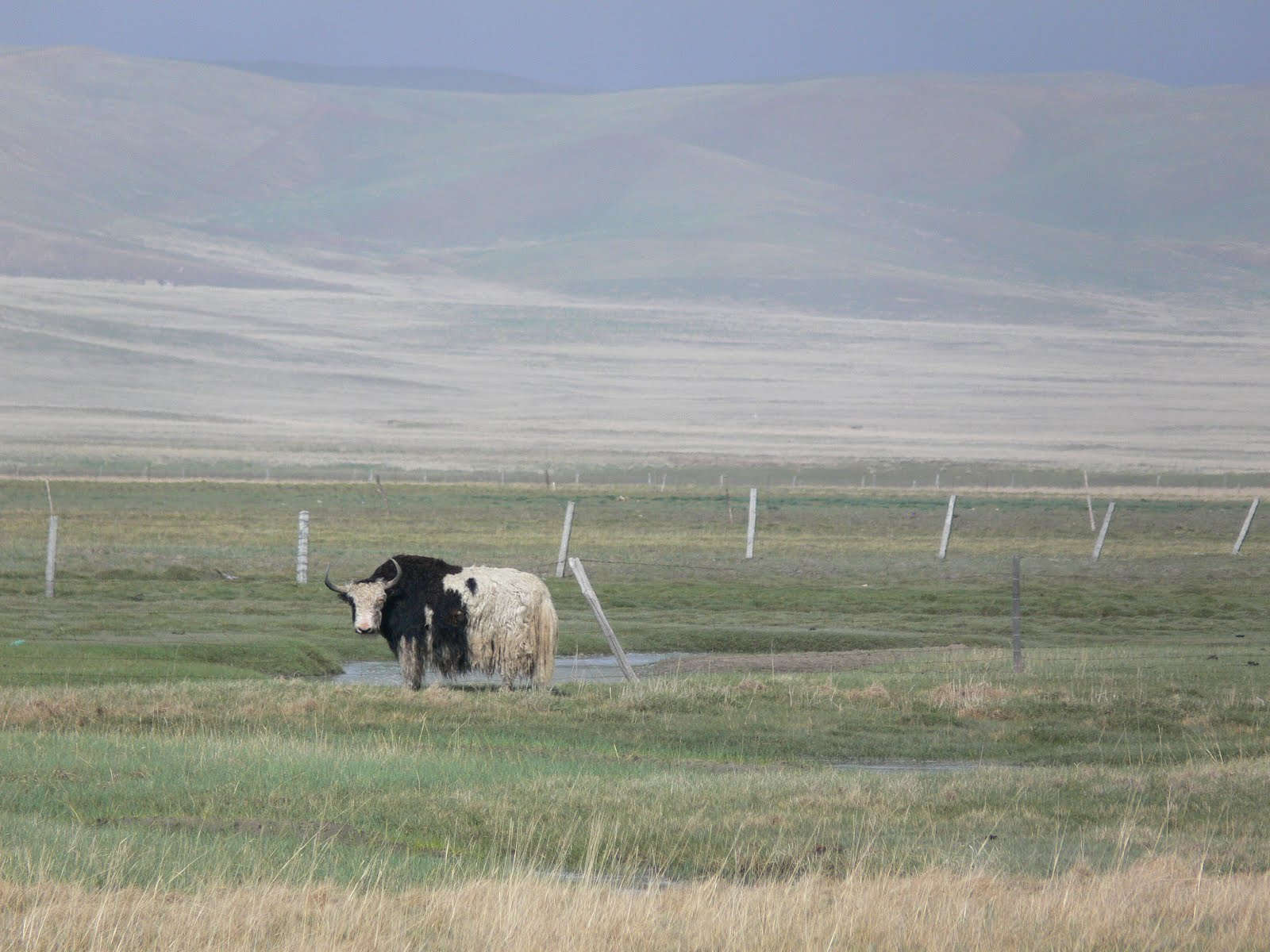

If you have time for an excursion, head out to Sanjiangyuan (Three Rivers Point) National Nature Reserve, where the Yangtze, Yellow River, and Mekong river meet for a variety of birds and other wildlife such as antelope, gazelles, and wild donkeys. One of the most awesome creatures you will likely see in this region is the yak or the yow, a cow/yak hybrid; a ridiculously shaggy but amazingly cute creature that looks like it walked right off of the Muppet Show and into the real world.
 The region is at around 4,000 ft above sea level, so if you plan to travel in this region, make sure you spend a day or two in the city taking it easy before venturing out to sites further afield. You can get here easily and cheaply by train from Beijing West Station; reservations are not normally needed for this particular train during most of the year, though it is advised that travelers book at least a week ahead (when possible) during the summer months since it can get busy. That said, the train is an experience in itself and it's an awesome site to see the countryside whizzing past.
One last word to the wise, bring snacks with you, including a bowl or two of instant noodles, as there is not necessarily much to eat for the average traveler (though there were chicken feet that came through on a cart!), and it's better to be safe since options are limited on the train.
Thursday, July 9, 2015
Theodore Roosevelt National Park

 Although rich and street-raised, Teddy Roosevelt came out to the Dakota Territory for adventure and a bit of experiential therapy after the death of both his wife and mother. When he first came out, he invested in a local business called the Maltese Cross Ranch and mostly stayed in his lodge, hoping to heal from the trauma of losing the most important women in his life. Soon enough, though, he began to venture further afield and returned to hunting and even invested in a second local business, a cattle ranch called the Elkhart Ranch. Roosevelt said that this time in the badlands was highly influential in his life and policy later when he became a politician.
Today, this National Park is home to a host of megafauna: wild horses, prairie dogs, bison, elk, deer. Beyond this wildlife, the landscape itself is stark and impressive; as you take in the views, you have to wonder how people made any sort of living from this desolate environment. In the winter, this landscape freezes, food is nonexistent, and winds chill you to the bone. In the spring, the sun is strong but the wind is cold and bitter, as is the fall. In the summer, the temperature can soar above 100 degrees fahrenheit and cause blistering burns and dehydration incredibly quickly. This is a harsh environment, for sure, and all the while we were exploring this place, I kept thinking how lucky I was to be able to visit such a beautiful place while being acutely aware of just how dangerous a place like this could be without our modern conveniences.
Seeing all of the megafauna is truly impressive, not just because it is so difficult to see these animals out in the open under normal circumstances, but also because of the sheer harshness and desolation of the environment. The landscape is gorgeous and serves and the perfect backdrop, reminding us that life can thrive even the most remote and difficult locations.
 If you have the opportunity or can make the time, pay the park a visit in the spring. This is when the baby animals will have just been birthed and this is a particular; baby animals are always adorable to see and makes for some really great photos. Just make sure you stay a safe distance from all wildlife, especially when babies are around; parents are prone to being much more aggressive and many will not think twice about doing serious damage to any perceived threat to their young.
Thursday, July 2, 2015
Teaser 6: Name that place!

Hints for this week:
- This is a National Park.
- This Park had a very famous, presidential resident.
- The hillsides of this area contain coal.
Can you guess the name of this National Park?
Thursday, June 25, 2015
Beijing Old and New: Hutong and Modern Construction


 Mainland China is marching boldly and deliberately towards a modern age of new and sleek architecture often influenced by international architects. However, there are still patches of the city that have escaped the bulldozer, and it is worthwhile to seek out these remnants of Beijing's more civic history. The stark contrast between old and new in Beijing is mind blowing, so I greatly encourage people to seek out high vantage points such as Beijing's Bell Tower to take in the views of old hutong (small alley houses), new revamped hutong rebuilt to maintain cultural heritage (Go Beijing!), and modern architecture.
  It is possible to rent a bicycle tuk tuk with driver (pictured above) around the base of the bell tower that will take tourists through a trip back through time into these small houses off of smaller alley ways. Most of these houses are part of 'siheyuan' or four cornered courtyards, which usually have four small houses on each side that share the common courtyard. This was the most common form of housing in urban areas up until the 20th century, and because most of them are over a hundred years old, many are falling into disrepair. The government, as mentioned above, is preserving some of the hutong residences as part of an effort to preserve these invaluable historical and cultural sites. However, the majority will likely fall victim to modernity and the push for a higher standard of living.
  When I last heard, it seemed the government had plans to bulldoze the hutong in order to build high rise apartments to increase available housing in this very expensive and very tightly packed city, something that is crucial for Beijing. Unfortunately, there were concerns at the time that the original residents of the area would not be able to afford to buy apartments in these new complexes due the the mark up (current real estate prices were significantly higher than the payment residents received for their houses). It is my hope that these issues were resolved satisfactorily for all involved, though I continue to worry about the original residents as governments all over the world (especially in the US) tend to exploit private land owners for the sake of 'public projects.' Therefore, I think it's appropriate to end this post with this poignant piece of graffiti painted on a hutong wall: what will the future bring? We'll have to wait and see.
Thursday, June 18, 2015
Throwback Thursday: Beijing Public Parks

My first trip to China (PRC) was back in 2005, now about 10 years ago. A decade ago, I spent a semester studying Chinese at WorldLink Education in Beijing's CBD or Central Business District in SoHo. In about four and a half months at this intensive language program, I was enrolled in 30 hours of Chinese language a week, and went from knowing almost no Chinese to a year three university Chinese class! If you're thinking about joining an intensive language program and will be in Beijing, definitely give WorldLink some consideration. If you're more generally considering immersion language classes, I highly recommend them- there is no better, more effective way to learn.


 On my most recent trip to Beijing to visit friends, I noticed a marked improvement of the air quality (though it is still bitterly cold and dry in the winter!). On my visit in 2011, almost every day had beautiful blue skies, and while in more recent history Beijing seems to have abandoned the goal of clear skies, it was absolutely gorgeous when they were enforcing this policy.
 You could easily spend a lifetime in Beijing and not see everything that this single city has to offer- but if you just have a few days, I would definitely try to work in some of Beijing's parks, especially Beihai Park, to take in both the beauty and culture of this unique city. For an even more unique view, get to Beihai or any other large park in the early mornings around dawn to hear amateurs singing Beijing Opera and playing accompanying instruments, fan dances, water calligraphy, and if the wind is right, kite flying. Later in the day, parks come alive with snacks sellers, wedding photo sessions, fishing, cricket competitions, and people taking their birds for walks in their cages. This scene is uniquely Beijing, and is something that I am constantly nostalgic for; if you get the chance to experience this beautifully chaotic scene, don't pass it up!


Subscribe to:
Posts (Atom)